Guides
How much does car rental cost in Cape Verde? 2026
Indicative car rental prices in Cape Verde for 2026: cost by category (economy, SUV, 7-seat), variation by island and season…
Read more
#precos#comparacao
Cape Verde is an archipelago of ten islands, each with its own personality. Renting a car stops being a luxury and becomes almost essential if you want to discover Sal's secret beaches, Fogo's volcanic trails, or Santo Antão's hidden valleys. Here we gather practical guides, driving tips, and itineraries tested by people who've actually made the trip.
The difference between a smooth trip and one full of headaches comes down to small details — knowing which type of car to pick for each island (on Santo Antão, an engine for the climbs; on Sal, a city car is enough), understanding local traffic rules, or knowing where the petrol stations are before heading down a dirt road in the interior of Boa Vista.
The articles below cover everything from the essentials — required documents, the deposit, how airport pickup works — to full 3, 5 and 7-day itineraries tailored to each island. Filter by category or use the search to find exactly what you need.
Indicative car rental prices in Cape Verde for 2026: cost by category (economy, SUV, 7-seat), variation by island and season…
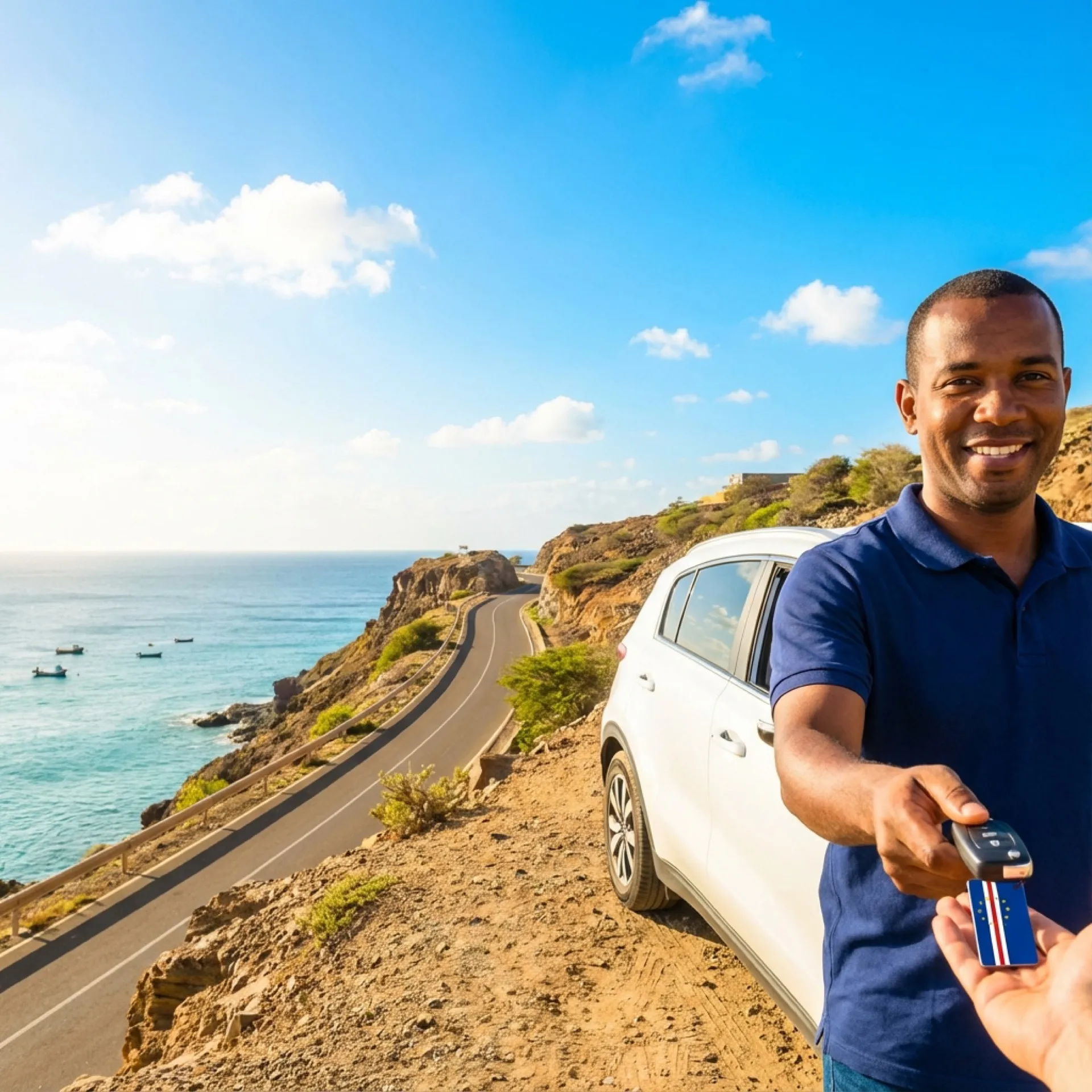
Everything you need before renting a car in Cape Verde: accepted licences, minimum age, credit card, deposit…
Short answers to the most common questions before booking.
If your licence is in the Latin alphabet, your national licence is enough; if not, also bring an International Driving Permit. Either way, it must be valid for the whole rental.
21, unless the company sets a different minimum age. The age that applies to each car is shown on its page, before you book.
Online, almost always. Airport-counter prices are significantly higher, and during peak season (July–September, Christmas) you risk arriving to find no cars available. Booking online ahead guarantees the best price and availability.
On Sal, Santiago and São Vicente any car will do on the main roads; on Boa Vista too, and an SUV helps for the more isolated beaches. On Santo Antão, Fogo and Brava the main roads are paved and a normal car is fine, as long as it has the power for the climbs; ground clearance helps on inland tracks.